Showing posts with label rodents. Show all posts

Monday, December 30, 2013

Biggest new animal discoveries of 2013


Thousands of species were scientifically described for the first time in 2013. Many of these were "cryptic species" that were identified after genetic analysis distinguished them from closely-related species, while others were totally novel. Below are some of the most interesting "new species" discoveries that took place or were formally announced in 2013. 

Monday, November 11, 2013

Happy Veterans Day- Animals of War

Did you know dogs and horses weren't the only types of animals used in war? A variety of species were used to carry out different tasks such as detection, protection, therapy, and sledging.

Carrier Pigeons carried messages. Cher Ami saved 200 US troops by carrying a message 25 miles despite being blinded and shot twice.
Dogs pulling machine guns
Camel Corps
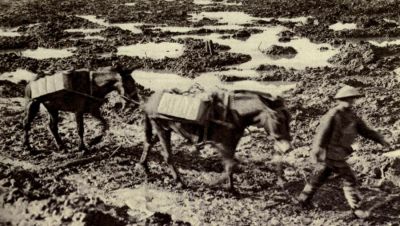
 Mule Team

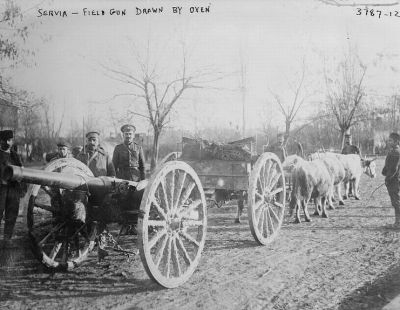
Oxen Team
Canaries used to help calm wounded soldiers

Dolphins were used for locating underwater mines

Glow worms were collected and used to light maps and charts in the trenches in WWI

Circus Elephants were used to pull heavy loads and plow fields as horses and mules were taken off to war. They were also used in WWII to haul supplies through jungles, and across rivers and mountains. The movie Operation Dumbo Drop was based on a true story.

African Rats are being trained to sniff out landmines that still remain several years after the civil war in Mozambique. Rats are easy to train and their light weight prevents tripping any mines that may be in the search area.


As you can see, a variety of animals were used in war. No matter how big or small, they all played a significant role and were held with high esteem. Of course, behind every great animal there is a great handler as well. Whether 2 legged, 4 legged, feathered, finned, or furred, your dedication to your country is greatly appreciated. Thank you.


Sources: Denver Post

Friday, September 2, 2011

Friday Find

Today's Friday Find is a whopper: 150 guinea pigs! You read that correctly. These poor little guys were dumped at a SoCal shelter and quickly absorbed by area small animal rescues Wee Companions & Orange County Cavy Haven. Many of these guinea pigs are skinny, suffer from various health issues and illnesses, and/or are pregnant. The rescues are in desperate need of funding and supplies, so here are a few simple ways you can help out:

Local folks:
1) They are in need of anything and everything as far as supplies and food** go
2) Offer to volunteer and/or foster
3) Adopt 1 or 2 or 3 of course! :)

Non-local folks:
1) The easiest option would be to donate via Chip-In which will be divvied up between the rescues involved.
2) You may donate or ship items directly to the rescues
4) As the Chip-In link says, some will be transported to UT & AZ so keep an eye on your local piggy rescue if you live in one of those states and are looking for a new BFF!

Items needed includes bedding, guinea pig food**, timothy hay**, water bottles, food dishes, etc etc
**Food and hay brands accepted are: Oxbow or KMS Hayloft

Guinea pigs hail from South America where they play an important role in the culture. They are traditionally used in religious ceremonies, folk medicine, and also as a protein source. As pets, they make delightful companions. They are a social animal that prefers having company of their own kind, however can be housed singly as long as a significant amount of time is dedicated to providing attention. Guinea pigs are the most vocal of the rodents and make a variety of noises. They are also quite intelligent and are capable of learning tricks. To learn more about guinea pig care, check out Guinea Lynx.


Monday, January 25, 2010

Fun With GFP's

Green flourescent proteins, which are naturally occuring in some species, can be attached to other proteins enabling scientists to mark proteins of their choice with a green glow. GFP's have been used to decrypt previously invisible processes, like the spread of cancer or the development of nerve cells.

Crystal Jelly- Green fluorescent protein, naturally occurring


Rhesus Macaque Monkey- Green fluorescent protein, introduced into DNA of egg via virus (2008)

Pig- Green fluorescent protein, added to embryos (2006)

Cat- Red fluorescent protein, introduced via a virus into cloned DNA, which was implanted in cat eggs, then implanted in mother (2007)

Mice- Green fluorescent protein, received via DNA from father, which had been implanted with glowing sperm-creating cells from a flourescent mouse (2004)

Mice- Cyan, red, and yellow fluorescent proteins, injected into DNA in embryos (2007)

Tobacco- Firefly luciferase gene, introduced via a virus into tobacco DNA (1986)

Emperor Scorpion- Beta-carboline, naturally occurring

Nematode Worm- Green fluorescent protein, introduced into its DNA (2005)

Dog- Red fluorescent protein, introduced via a virus into cloned DNA (2009)

Zebrafish- Green, yellow, and red fluorescent protein, introduced into its DNA (2003)

Bacteria- Multiple colors of fluorescent protein, introduced into its DNA (2008)