Showing posts with label conservation. Show all posts

Sunday, February 9, 2014

WildLeaks Launches

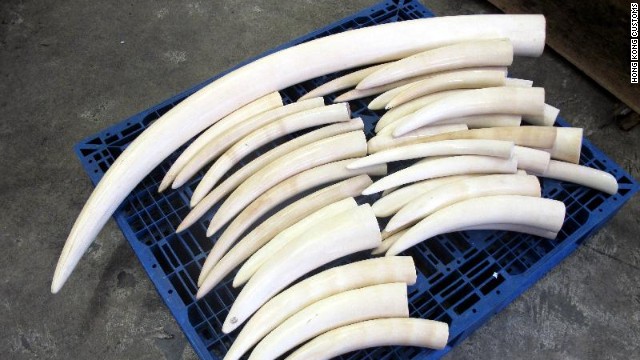
These contraband wildlife trade items were seized by the UK's Border Force. 
 
A group of organizations fighting wildlife crime have come together to launch WildLeaks - the first global, secure online whistleblower platform dedicated to wildlife and forest crime.

"We hope that offering a secure platform for information that will be followed up will encourage those with inside information to let us know about it."

Wildlife crime is the 4th largest transnational crime in the world, worth at least US$ 17 billion annually, after narcotics, counterfeiting, and human trafficking.

It now the most immediate threat to many species including elephants, rhinos, big cats and apes. Forest crime, which is the illicit trade in illegally logged timber, degrades forests and destroys wildlife habitats. These crimes also cause a significant human and economic toll.

Blowing the whistle on wildlife crimes, especially when criminals and corrupt government officials are involved, is a risky endeavor. But with WildLeaks a big part of that risk has been taken away.


Tuesday, December 31, 2013

WildAid's Top 5 Stories of 2013

#5- Ivory Busts
As the poaching crisis gained attention this year, the media reported on the ongoing smuggling efforts of illegal traders. CNN’s Ramy Inocencio reported on “one of the biggest busts of its kind in Hong Kong” when officials seized 1,120 ivory tusks and 13 rhino horns valued at more than $5.3 million.

 #4- Big Names Join Demand Reduction Campaigns
This past year saw several big names join the fight to reduce the demand for endangered wildlife products. The Clinton Global Initiative launched a campaign to save African elephants while the Obama administration sought input from NGOs, including WildAid to stop demand for products like ivory and rhino horn. The Duke of Cambridge spoke out in support of demand reduction, even in Mandarin, joining us in our latest message that also features iconic athletes David Beckham and Yao Ming.

 #3- Ivory and Terrorism
National security became the focus of several media reports as more evidence linked the trade in illegal wildlife products to groups including Somalia's al-Shabaab and Joseph Kony's Lord's Resistance Army.

#2- Rhinos Killed in Record Numbers
Rhinos were poached at a record pace this year. Nearly 1,000 were killed in South Africa for their horns, up from a then record 668 in 2012 and 13 in 2007. The grim reports came directly from South Africa’s Department of Environmental Affairs and were tempered slightly in December with news that Thandi, a rhino who survived poachers taking her horn, is now pregnant.

 #1- Sharks Gain Respect 
In 2013 we saw children come together (on a beach) to protect sharks as well as some airlines pledging not to ship fins. Several states in America banned shark fin and even Hong Kong took a stand against shark in soup. However, news that China banned shark fin from state banquets two years ahead of a self imposed deadline sent a message around the globe that will put other governments on notice.

Sunday, December 29, 2013

Endangered Species Act Celebrates 40th Anniversary


For 40 years, the Endangered Species Act has protected America's imperiled plants and animals—from the carnivorous green pitcher plant of Southeastern wetlands, to the western snowy plover of northwestern beaches, to the iconic polar bear of the Arctic.

This video takes us through the successes the ESA has brought in the last four decades, and looks ahead to the work that still needs to be done. - See more at: http://www.fws.gov/endangered/esa40/#sthash.c4QSyBCm.dpuf
For 40 years, the Endangered Species Act has protected America's imperiled plants and animals—from the carnivorous green pitcher plant of Southeastern wetlands, to the western snowy plover of northwestern beaches, to the iconic polar bear of the Arctic.

This video takes us through the successes the ESA has brought in the last four decades, and looks ahead to the work that still needs to be done. - See more at: http://www.fws.gov/endangered/esa40/#sthash.c4QSyBCm.dpuf
There are approximately 2,140 species listed under the ESA. Of these species, approximately 1,515 are found in part or entirely in the U.S. and its waters; the remainder are foreign species.

The Endangered Species Act itself also needs protecting. Politics, commercial industry, and funding cuts threaten to weaken or choke the ESA's ability to protect endangered species. With more and more species being added the the Endangered Species list, now more than ever is it important that the ESA remain intact.

25 Most Endangered Species on Earth


Fish & Wildlife Service
Defenders of Wildlife
National Wildlife Federation
Sierra Club
World Wildlife Fund
Nature Conservancy


Saturday, July 6, 2013

Laborador Beetriever

A specially trained sniffer dog helps keep Australian bee populations healthy by sniffing out a deadly bee disease called American foulbrood. 

Saturday, February 2, 2013

Bloodsucking flies help scientists identify rare, hard-to-find mammals

The face of the blue bottle fly (Calliphora vomitoria). New research shows how this carrion-eater carries the mammals of the forest in his stomach. Photo by: J.J. Harrison.

Last year scientists released a study that is likely to revolutionize how conservationists track elusive species. Researchers extracted the recently sucked blood of terrestrial leeches in Vietnam's remote Annamite Mountains and looked at the DNA of what they'd been feeding on: remarkably researchers were able to identify a number of endangered and rarely-seen mammals. In fact two of the species gleaned from these blood-meals had been discovered by scientists as late as the 1990s. In the past, trying to find rare and shy jungle animals required many man hours and a lot of funding. While the increasing use of remote camera traps has allowed scientists to expand their search, DNA sampling from leeches could be the next big step in simplifying (and cheapening) the quest for tracking the world's mammals. But now a new study in Molecular Ecology adds another twist: flies. 


Tuesday, January 22, 2013

Cornell University's biodiversity recordings made public


The Macaulay Library is the world's largest and oldest scientific archive of biodiversity audio and video recordings. Our mission is to collect and preserve recordings of each species' behavior and natural history, to facilitate the ability of others to collect and preserve such recordings, and to actively promote the use of these recordings for diverse purposes spanning scientific research, education, conservation, and the arts.

Sunday, July 8, 2012

Dolphins made citizens of Japanese Island

Where dolphins are revered in Japan

On a small island 100 miles from Tokyo islanders, mostly fishermen, have declared resident dolphins to be citizens, fully protected while in the island's waters.

The fishermen of Toshima Island show us how some Japanese revere and protect wild dolphins. BlueVoice is supporting our long time Japanese ally, Elsa Nature Conservancy, to help the Toshima Islanders educate Japan about the wonders of wild dolphins.

The Toshima Dolphin Project will expand knowledge of this unique island and the relationship between the people of the island and its 16 resident dolphins. It will provide a vision that will inspire their fellow countrymen and bring to them an understanding of the importance of allowing dolphins to remain free and safe from hunters' blades. As we all know, Japan is a nation where up to 20,000 dolphins are killed yearly.

Now we are supporting a dolphin watching initiative at Toshima Island in the hope that contact with wild dolphins and press coverage of this unique development will cause the Japanese people to rally to the protection of dolphins elsewhere in Japan.

Here is a description of the Toshima Dolphin Project written by Sakae Hemmi of Elsa Nature Conservancy, long a collaborator with BlueVoice.

"In 1995 a dolphin came to Toshima waters and remained. In 1998 the dolphin, named Koko, gave birth. The baby was called Piko. The mother and baby were so revered that they were registered as citizens of the island. Around 2010 several dolphins from Mikura island moved to Toshima and several have given birth. As of February 2012, a pod of 16 dolphins swims in the waters of Toshima."

Unfortunately the pivotal man in the Toshima Dolphin Project, Mr. Moriyama, died in February. But others have picked up the banner. Right now funds are urgently needed to finish the project website, send a video team to the island to film the dolphins and fishermen, to make a DVD for release in Japan and to hold a symposium in Tokyo on dolphins in Japanese waters.

Sakae writes further: "I think it important to have many people learn and experience that wild dolphins are animals that we can make friends with and live together. Toshima is a very important place to raise the Japanese people's consciousness to protect wild dolphins."

Thursday, September 22, 2011

Today is World Rhino Day


There are 5 species of Rhinoceros:
White
Black
Indian
Javan
Sumatran

3 of the 5 species are critically endangered according to the IUCN Red List

Rhinoceros are in decline due to habitat loss and poaching of their horns. The horns consist of keratin and are thought to possess medicinal properties in some cultures creating a demand for them. There is no scientific evidence that they possess any healing properties.

Wednesday, July 27, 2011

Tuesday, June 21, 2011

Orca Celebrates 100th Birthday!


Come celebrate the estimated 100 year birthday of J2, Granny !!!

The Center for Whale Research is hosting a celebration of the estimated birth year of J2, one of the oldest females in the southern resident killer whale population. Based on J2's apparent age at the inception of the Orca Survey study in 1976, she is estimated to have been born in 1911 making 2011 her 100th year, and although we do not know her exact age she is likely the oldest living whale among J,K, and L pods. This celebration marks 100 years of evoloving interaction between humans and killer whales in the ecosystem now known as the Salish Sea.

We invite everyone to come to Lime Kiln State Park to celebrate the estimated century long life of J2 and to learn more about and the obstacles she, and all the southern residents, have faced in their struggle to survive the changing world.

Please join us, bring your own picnic lunch to the park, and enjoy an afternoon of music by the Kevin Carr Family Band followed by a talk from Ken Balcomb, director of the Center for Whale Research. There will be children's games and activities provided by Jeff Hogan's Killer Whale Tales. The Salish Sea Association of Marine Naturalists (SSAMN ) will also be hosting an informational booth offering tips and opportunities to foster stewardship of the Salish Sea environment on which the killer whales depend. Additionally, the Center for Whale Research Information Station will be open to provide education about the local killer whales and the Orca Survey project.

J2 100th Birthday!

WHEN: July 2, 2011, 1:00 p.m. to 4 p.m.
WHERE: Lime Kiln Point State Park, San Juan Island
WHO: Hosted by the Center for Whale Research and supported by:

  • Kevin Carr Family Band
  • Killer Whale Tales - Environmental Science Though Storytelling
  • SSAMN - Salish Sea Association of Marine Naturalists
  • Orca Network - Connecting whales and people in the Pacific Northwest

  • We hope to see you all there!

    For additional information or questions please contact: erin@whaleresearch.com

    ~~~~~~~~~~~~~~~~~~~~~~~~~~~~~

    To find out how you can adopt a Southern Resident orca, check out The Whale Museum!

    Friday, April 30, 2010

    How to Help Frogs


    She is too darn cute! You go girl!

    Sunday, September 14, 2008

    The Animals Save the Planet

    On the AnimalPlanetTV youtube channel, they have these little series of commercials about easy ways to help out the environment that features our animal friends. They're so cute, funny, and conveys a simple yet important message in a short and effective manner.

    This one is one of my favorites:


    You can see the rest here: Animals Save the Planet

    Sunday, April 13, 2008

    Keiko's Dream..... Keiko's Legacy


    KEIKO'S DREAM... KEIKO'S LEGACY
    An Educational Video
    Coming in 2008

    Joshua Records in association with The Free Willy Keiko Foundation to release an Educational Video about Keiko’s Life and Legacy, utilizing music written by Theresa Demarest from The Keiko’s Dream Tour.

    The goal for this film is to encourage you to take a second look the whole effort to release Keiko back to the wild. We hope to evoke within you a desire:

    *to ponder Keiko's own strong will to survive
    *to explore his enormous embrace of his own freedom
    *to observe his behavior and compare it to orcas in the wild
    *to see things about Keiko in a way that maybe you didn't think about before
    *to look at what The Free Willy Keiko Foundation and all those directly involved were doing
    *to look at the ways in which the effort to release a captive whale into the wild succeeded perhaps from Keiko’s point of view
    *to encourage the study of so many questions left unexplored...

    The "KEIKO’S DREAM... KEIKO'S LEGACY" DVD utilizes footage provided by the Free Willy Keiko Foundation, Ocean Futures Society, Orcalab, and independent videographer Eric Engelken. The DVD is being produced by Joshua Records.

    The title song "Keiko’s Dream" is an original instrumental piece dedicated to Keiko that evokes the whale’s song through the extra-ordinary lead guitar theme written by Theresa Demarest and eloquently performed by Good Company band member Tim Ellis. A second song titled: “Keiko” written for the DVD is performed by Theresa Demarest, Renato Caranto, and Thera Memory.

    This is Keiko's Dream... This is Keiko's Legacy.

    Tuesday, January 1, 2008

    2007 Top Ten Wildlife Conservation Success Stories

    1) Terrific toadlets

    Habitat loss, pollution and disease are hitting some of the smallest creatures on earth the hardest. Frog populations have been in sharp decline the past few decades, but a fortunate native species is getting a helping hand from scientists. Staff at the Detroit Zoo are raising 40 juvenile Wyoming toads, one of the most endangered amphibians in the United States. The species is now considered functionally extinct in the wild, with the last remaining individuals only found in zoos and aquariums across the country. The zoo breeding partnership, led by Central Park Zoo and Omaha's Henry Doorly Zoo, has successfully released more than 6,000 tadpoles, toadlets and toads in Wyoming since the program's inception in 1995. Recent good news indicates that the recovery efforts may be paying off: this summer in a monitored protected area, conservationists discovered the first clutch of Wyoming toad eggs found in the wild in ten years.

    2) Mice on the move

    This summer, Santa Fe Community College Teaching Zoo in Gainesville, Florida, began housing 52 Perdido Key beach mice to protect the species from extinction. The mice originated from the University of South Carolina, but needed to be relocated after damage from Hurricane Ivan. The Brevard Zoo, Florida Aquarium and Palm Beach Zoo have since shared in the responsibility of caring for and studying the mice. There are only a few hundred individuals left in the wild, inhabiting just one barrier island off the coast of Pensacola. Scientists fear that a hurricane could be disastrous to the beach mice, potentially causing the species to become extinct in the wild. Breeding studies have commenced to safeguard their numbers.

    3) The right stuff for right whales

    The world's rarest large whale, the right whale, has been the topic of interest for scientists at the New England Aquarium this past year. Fewer than 400 North Atlantic right whales currently exist in the world, and are threatened by ship collisions and entanglement in fishing gear, habitat loss, pollution, and disease. The New England Aquarium's Right Whale Research Project recently developed a hormone test to learn more about the reproductive rates of the endangered species. This information is critical in helping these giant sea creatures survive.

    4) Loose lemurs

    Black-and-white ruffed lemurs born in zoos are getting a feel for their new home at the Betampona Natural Reserve in eastern Madagascar. The Madagascar Fauna Group (MFG), and the Duke Lemur Center coordinated the plan to reintroduce zoo-bred lemurs to the wild, with the help of other MFG partners and institutions, including Salt Lake City's Hogle Zoo, the Los Angeles Zoo and the Santa Ana Zoo. The released individuals are being monitored and have fared well so far, with four offspring born from three reintroduced lemurs.

    5) International sea turtle success

    The Kemp's ridley sea turtle population is in bad shape, but thanks to cooperation between U.S and Mexican officials and scientists, the species can rest assured that their nesting sites will be safe. The Gladys Porter Zoo in Brownsville, Texas, and Mexican conservation workers have protected the turtle's nesting sites on beaches in Tamaulipas, Mexico and Padre Island National Seashore. The Zoo reports an increase in nests by the hundreds each year on the Mexican Gulf Coast, indicating success of the program.

    6) Black and white is all the rage

    Grevy's zebras are the hot topic in animal awareness thanks to the Saint Louis Zoo. The Zoo has partnered with several Kenyan non-profits and other zoo partners to spread awareness to communities in the zebra's home range across Kenya. Grevy's zebras are threatened by poaching and competition from livestock, but efforts to raise awareness in Kenyan villages have been paying off and benefiting their wild populations, reports the Zoo. Several communities have established livestock-free conservation areas, which benefit not only the zebras, but all forms of wildlife in the region. Additionally, over 30 Grevy's zebra foals have been born and raised at the Saint Louis Zoo over the past five decades.

    7) Saving "Jaws"

    For the third time since 2004, the Monterey Bay Aquarium has placed a young white shark on public exhibit. The shark was caught accidentally in commercial fishing gear off Southern California. Through its White Shark Research Project, the Aquarium has worked since 2002 to learn more about white sharks in the wild, and has since tagged and tracked 10 juvenile white sharks off Southern California. White sharks are in decline worldwide, in part because they are slow to reproduce and also because of growing fishing pressure that is decimating all shark species. Their fearsome reputation has also made them a target of trophy hunters and the curio trade. The Aquarium's hope in exhibiting a white shark is to change public attitudes and promote greater protection for these much-maligned ocean predators.

    8) Blue skies for butterflies

    Floridian zoos have teamed up to protect the small but mighty butterfly. The Florida Butterfly Monitoring Network, which includes Brevard Zoo, Central Florida Zoo, Disney's Animal Kingdom, Jacksonville Zoo, Lowry Park Zoo, and Miami MetroZoo, is working to survey butterfly populations throughout Florida. Saving this small creature is no small task, and volunteer citizen scientists trained by the zoos conduct monthly counts of butterflies in both natural and man-made habitats on zoo grounds. This information allows researchers to monitor populations and look into potential threats to fragile butterfly species.

    9) Marmot Island

    The Vancouver Island marmot is the most endangered animal in Canada. Native to British Columbia’s Vancouver Island, these critters are being threatened by massive habitat destruction in the wild. Their current wild population is estimated at nearly 50 animals, but thanks to breeding centers devoted to the species, such as the Toronto Zoo, the population is now around 150. Calgary Zoo in Alberta was the first to successfully breed the marmots at their facility, and produced an impressive five litters in 2007. The pups will be reintroduced in Mount Washington, British Columbia, where they will undergo pre-release conditioning to improve survivability in the wild. Veterinarians at the Calgary Zoo were also recently awarded an AZA Conservation Endowment Fund (CEF) grant to study diseases impacting Vancouver Island marmot populations at the breeding institutions and in the wild.

    10) The regal eagle's recovery

    This year, America's national symbol, the bald eagle, was removed from the U.S. Fish and Wildlife Service's Endangered Species List. This was a grand feat for the species, which just a decade ago faced dwindling populations. The San Francisco Zoo has been instrumental in breeding and releasing captive eagles, and has reintroduced more than 100 bald eagles over the past 22 years. The Zoo reports about 200 nesting pairs of bald eagles in California today.


    ~AZA.org

    Thursday, December 27, 2007

    Terri Irwin- Japan's scientific whale kill is a sham


    Terri Irwin to Launch Whale Rescue
    Associated Press

    On a Mission Dec. 27, 2007 -- The widow of TV "Crocodile Hunter" Steve Irwin announced Thursday she will launch non-lethal research of whales in Antarctic waters next year in hopes of showing that Japan's scientific whale kill is a sham.

    Tokyo has staunchly defended its annual cull of more than 1,000 whales as crucial for research, saying it is necessary to kill the whales to properly gather information about their eating, breeding and migratory habits.

    Environmentalists and anti-whaling nations say the slaughter is commercial whaling in disguise, because much of the meat from the whales ends up being sold commercially.

    Terri Irwin said that a whale watching program she started to honor her late husband would expand into scientific research in 2008. Steve Irwin, the high-profile wildlife show host and environmental campaigner, was killed by a stingray last year off Australia's Great Barrier Reef.

    "We are working with Oregon State University to do formalized research in the southern hemisphere," Terri Irwin told the Nine Network television. "We can actually learn everything the Japanese are learning with lethal research by using non-lethal research."

    Japan's whaling fleet is run by a government-backed research institute and operates under a clause in International Whaling Commission rules that allows whales to be killed for scientific purposes.

    Japan had planned to kill up to 50 endangered humpback whales this season, but backed away from the plan in the face of strong international condemnation.

    "We are determined to show the Japanese they can stop all whaling, not just humpbacks," Irwin said.

    Further details of Irwin's planned research program were not immediately available.

    Earlier this month, Irwin threw her support behind a radical conservation group that has vowed to disrupt Japan's annual whale hunt, allowing the U.S.-based Sea Shepherd Conservation Society to rename one of its flagship vessels after her late husband.

    Sea Shepherd has come under heavy criticism in recent years for engaging in violent tussles with the Japanese whaling fleet in Antarctic waters.

    Friday, November 30, 2007

    Year of the Frog


    Sign up to be a friend of frogs! Yes, I want to help save amphibians. Please send me information about how I can help raise awareness, take conservation action and support the global 2008 Year of the Frog campaign.

    The Association of Zoos and Aquariums will highlight 2008 as the Year of the Frog to mark a major conservation effort to address the amphibian extinction crisis.


    Why Year of the Frog?

    Frogs are going extinct. So are toads, salamanders, newts, and the intriguingly unusual caecilians. In fact, the World Conservation Union (IUCN) estimates that at least one-third of known amphibian species are threatened with extinction. While the major culprit has historically been habitat loss and degradation, many of the declines and extinctions previously referred to as "enigmatic" are now being attributed to the rapidly dispersing infectious disease chytridiomycosis ("chytrid"). This fungus is causing population and species extinctions at an alarming rate. Can you imagine if we were about to lose one-third of the world's mammals?

    The combined effect of habitat destruction, climate change, pollution, and chytrid cannot be addressed solely in the wild. Captive assurance populations have become the only hope for many species faced with imminent extinction and are an important component of an integrated conservation effort. AZA-accredited zoos and aquariums, with their demonstrated expertise in endangered species breeding programs, have been called upon to meet this conservation challenge.

    The IUCN has classified four amphibians in the U.S. to be critically endangered, the Mississippi gopher frog, the Chiricahua leopard frog, the mountain yellow-legged frog, and the Wyoming toad. The U.S. Fish and Wildlife Service has listed thirty-seven amphibian species under the Endangered Species Act. AZA-accredited zoos and aquariums may be their only hope for survival.

    Sunday, November 4, 2007

    Climate change causes habitat shift in Kruger National Park


    Disappearing savannas in South Africa's Kruger National Park are forcing scientists to reconsider what conservation means

    This is a really long one so I hope you're not linkaphobic!

    Basically, they're noticing that ground grazers are moving out, and the tree grazers are moving in because the increase of carbon dioxide in the atmosphere is giving shrubs and trees an advantage over grasses. If this trend continues to increase they fear that savannahs will no longer be the dominant ecosystem and will mean the end for them.

    "Nature is reorganizing itself around the world"

    Anyway, it's not much of a surpise but the shift itself and its process is pretty interesting.